I want students to leave my courses able to do chemistry — to run an instrument, question a
result, and see how a reaction on the board connects to the water they drink.
My training as a science educator (B.Ed) and my years as a research analyst shape how I teach. I begin
with a concrete problem — a dye-coloured river, a heavy metal in tea, a spectrum that doesn’t look
right — and build the theory from there. In Spectroscopy and Instrumental Analysis, lectures run
alongside hands-on lab work so students link what an instrument measures to how it is actually operated,
calibrated, and trusted.
I design lessons for active participation, using structured models such as BOPPPS, and I treat
assessment as part of learning rather than an end point: clear criteria, timely feedback, and tasks that
reward reasoning over recall. As generative AI changes what students can hand in, I have redesigned
coursework so that it assesses thinking AI cannot supply — work I developed with a student partner
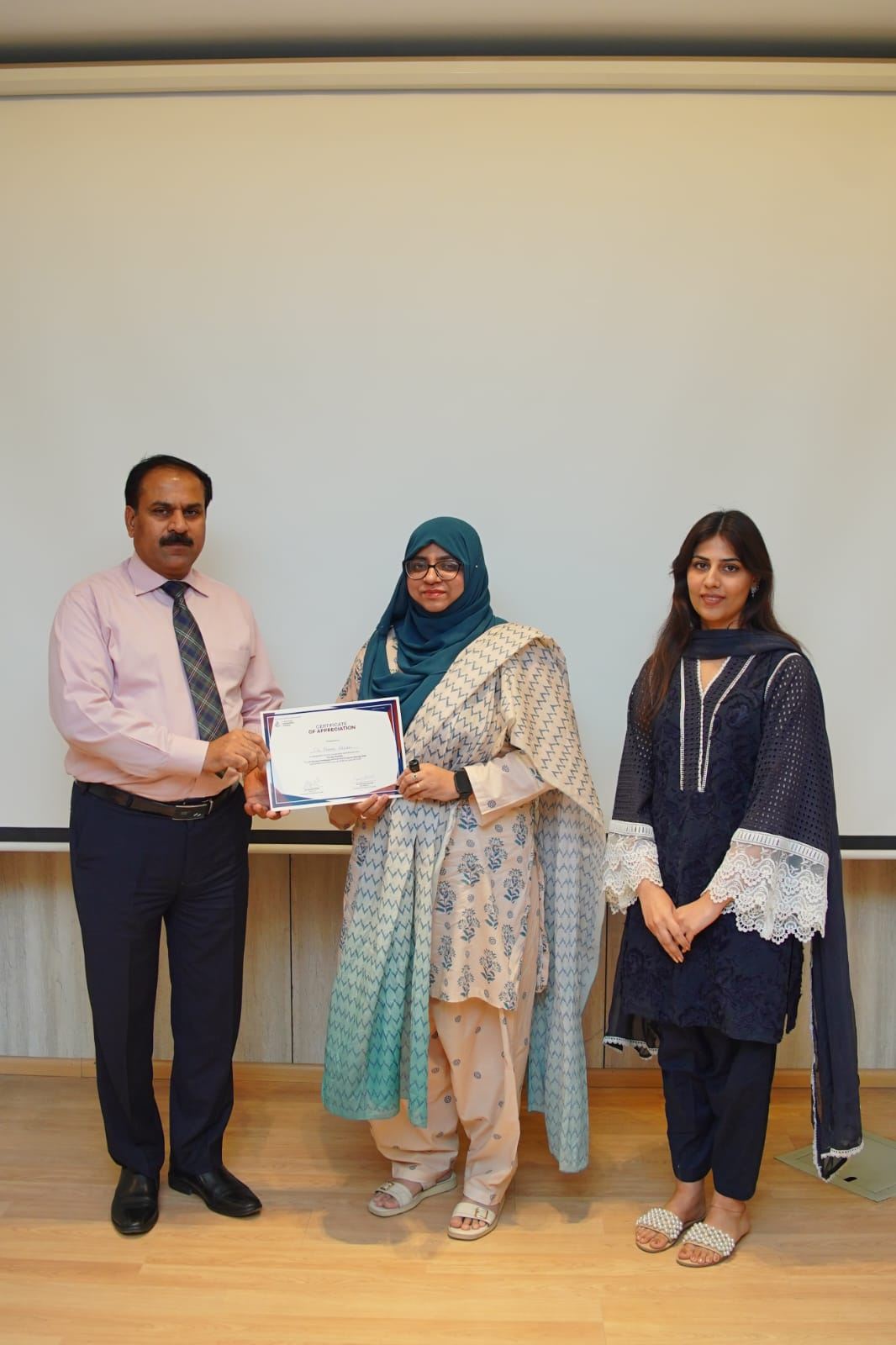
through UCP’s Student Pedagogy Partnership. Beyond the classroom, I mentor students through their
first research projects and connect them with scholarships and opportunities abroad.
- Problem first, theory secondReal environmental and analytical problems as the entry point to concepts.
- Theory meets the instrumentLecture and lab taught together, with safety and good practice built in.
- Assessment that builds thinkingFair, purposeful, AI-resilient tasks with constructive feedback.
- Students as partnersCo-designing coursework with students and mentoring them into research.