Publications
Peer-reviewed research in internationally indexed journals: breaking down pollutants with visible-light photocatalysts, capturing them with low-cost green biosorbents, and making nanomaterials through plant-mediated green synthesis. My name is shown in bold. The full record is on Google Scholar ↗.
Papers per year
2019 to 2026, plus one article in press · hover a bar for details
- 9Peer-reviewed papers
- 2As first author
- 6Indexed journals
- 3.8Highest impact factor
Photocatalysis & green nanomaterials
Doped zirconia photocatalysts that break down dyes and pharmaceuticals under visible light, and plant-mediated routes to zirconium nanomaterials.
-
Zr nanohybridsAloe barbadensis-mediated synthesisStudied against
- CCl₄-induced liver toxicity
Aloe barbadensis-Mediated Green Synthesis of Zirconium Nanohybrids for Carbon Tetrachloride-Induced Hepatotoxicity in Wistar Rats
Co-author · 2nd author Accepted, in press -
Zn–Mo / ZrO₂Co-doped visible-light photocatalystDegrades
- Congo Red (textile dye)
- Ciprofloxacin (antibiotic)
Synergistic effect of Zn and Mo co-doping in ZrO₂ for efficient photodegradation of Congo Red and Ciprofloxacin under visible irradiation
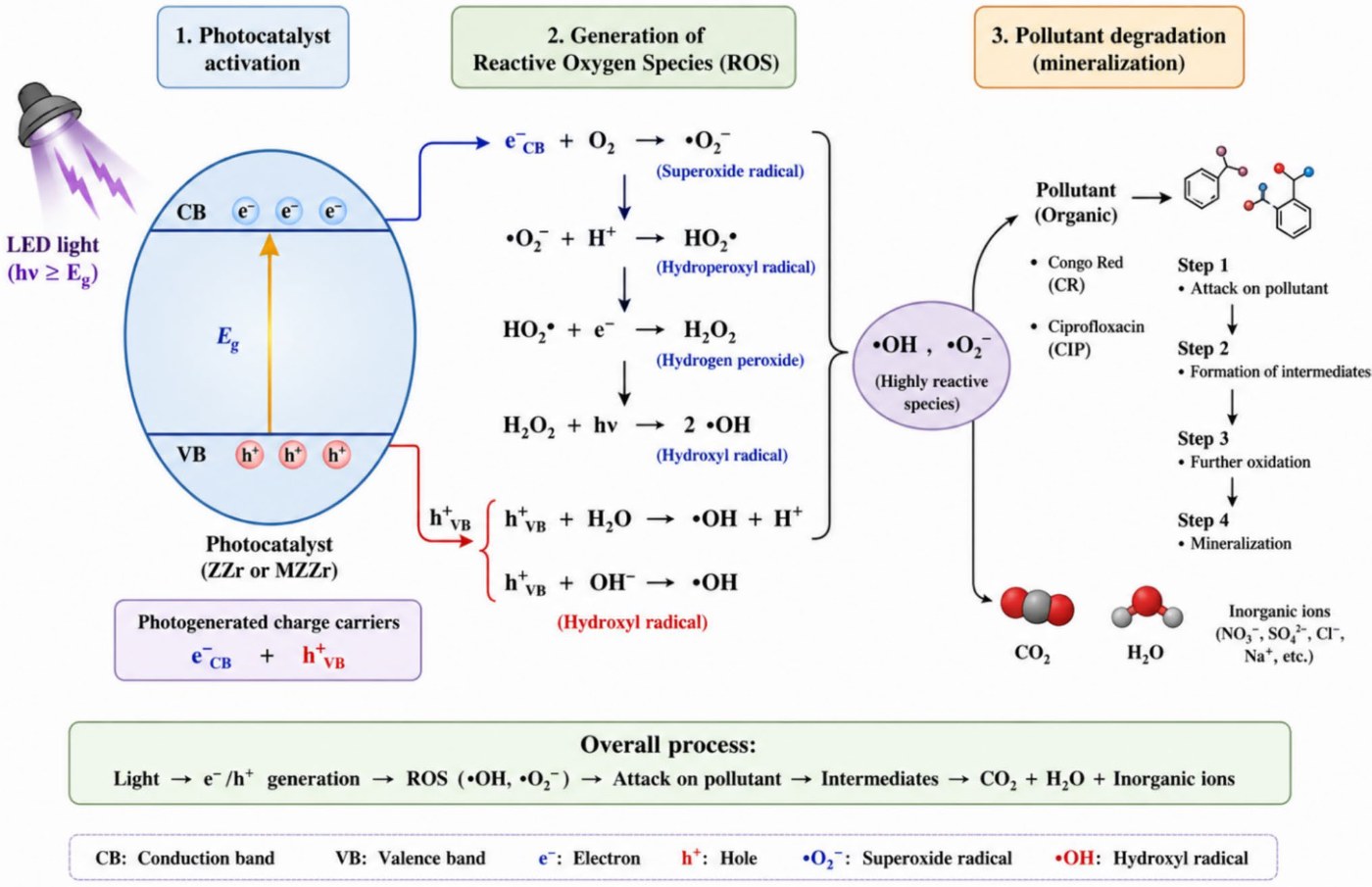
Proposed mechanism: reactive oxygen species (•OH, •O₂⁻) generated under LED light mineralize Congo Red and ciprofloxacin. Co-author · 2nd author Read paper (DOI) ↗ -
V / ZrO₂Vanadium-doped zirconiaTreats
- Dye-loaded wastewater
Vanadium-Doped Zirconia as an Efficient Visible-Light Photocatalyst for Advanced Treatment of Dye-Loaded Wastewater
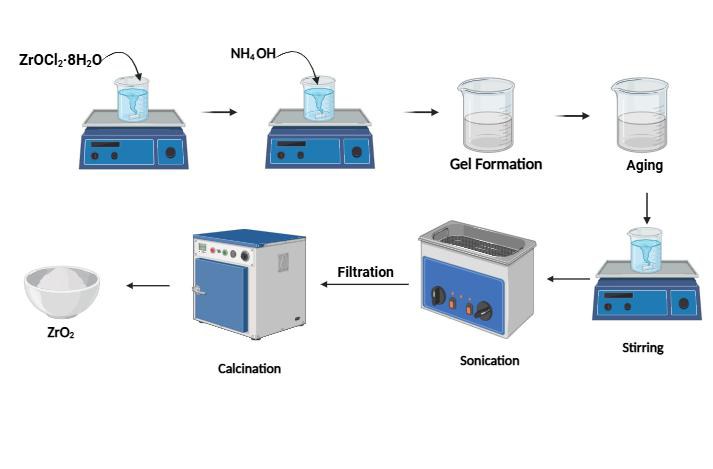
Synthesis route: gel formation, aging, sonication, filtration and calcination to ZrO₂. Co-author · 3rd author Read paper (DOI) ↗
Green biosorption
Low-cost biosorbents made from plant biomass and biowaste, chemically modified to capture dyes and toxic metal ions — with full kinetic, isotherm and mechanism studies.
-
Native biosorbentSingle & two-component systemsRemoves
- Lead · Pb²⁺
- Cadmium · Cd²⁺
Sorptive activity of potential native biosorbent for the elimination of lead and cadmium in one and two-component systems: characterization, kinetic activity, and mechanism exploration
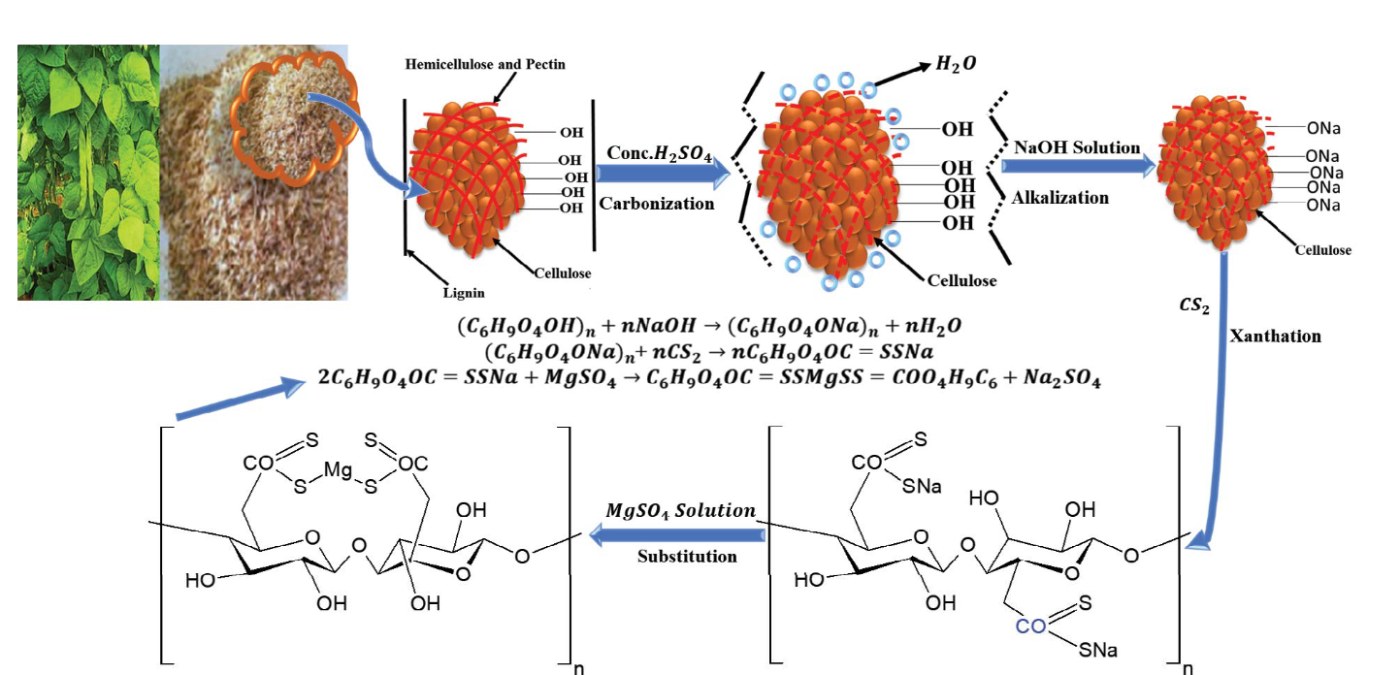
Xanthation of Phaseolus vulgaris biomass: carbonization, alkalization, xanthation and Mg substitution. Co-author · 2nd author Find paper ↗ -
Modified T. alexandrinumChemically modified clover biomassRemoves
- Chromium · Cr(III)
Biosorption activity of chemically modified Trifolium alexandrinum for the detoxification of Cr(III) contaminated water
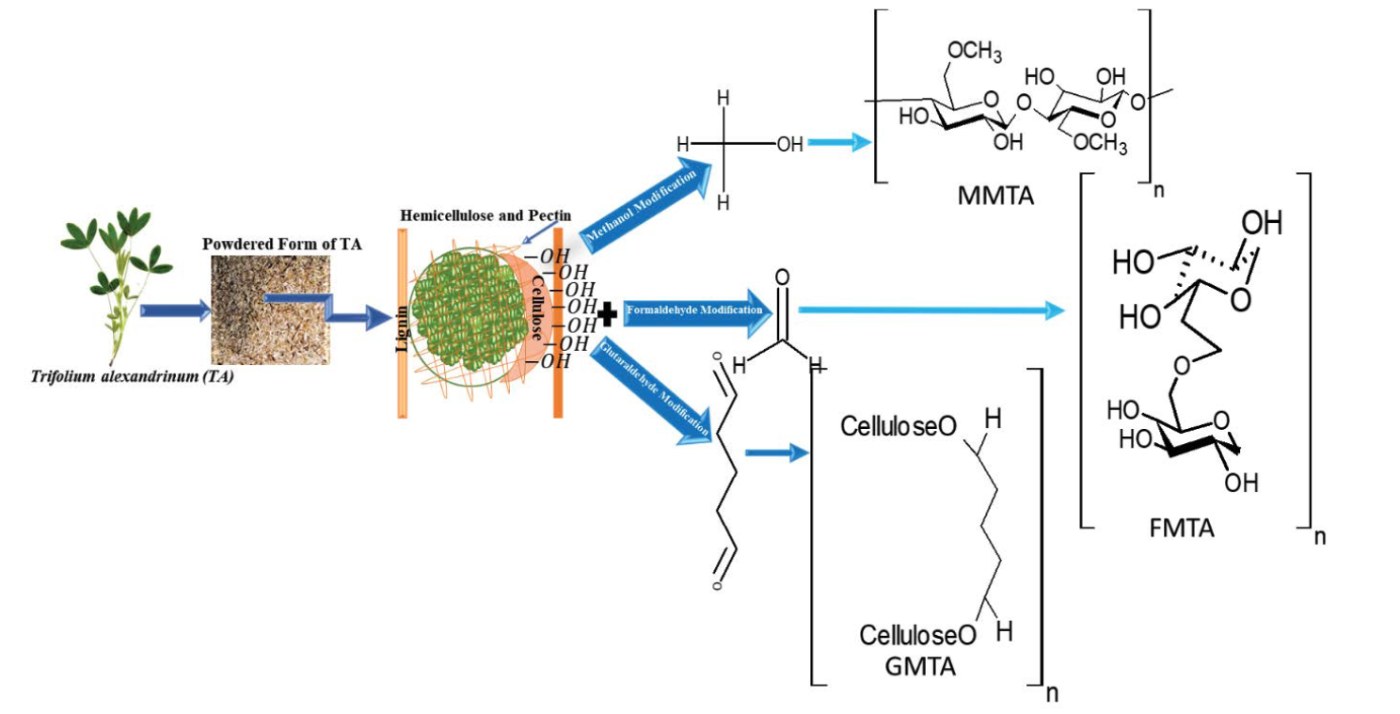
Modification mechanism: methanol, formaldehyde and glutaraldehyde treatments of T. alexandrinum. Co-author · 2nd author Find paper ↗ -
H. adenophyllum biowasteLow-cost biosorbentRemoves
- Gentian Violet (dye)
Kinetic and isothermal investigations of cost-effective sorptive elimination of Gentian Violet dye from water using Haplophragma adenophyllum biowaste
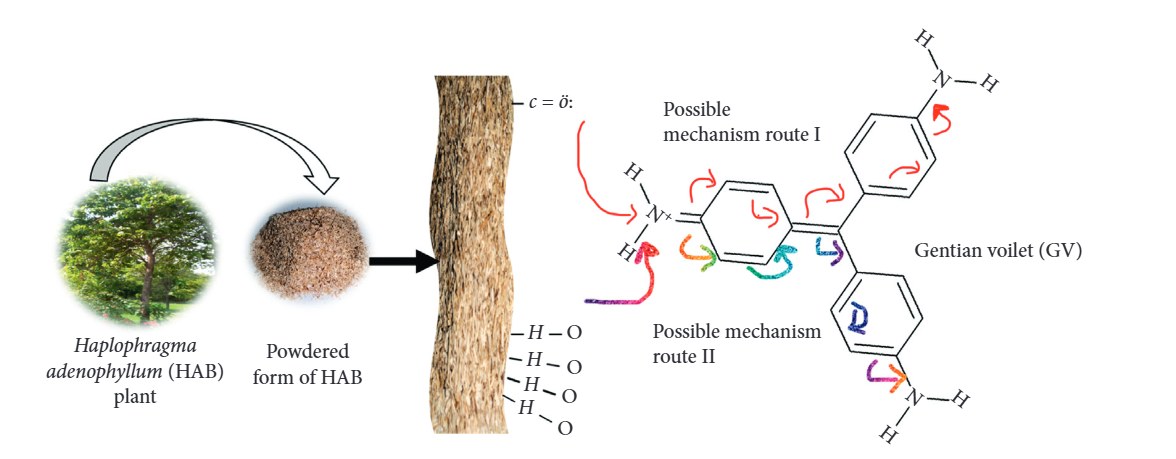
Possible routes by which Gentian Violet binds to H. adenophyllum bark. First author Find paper ↗ -
Phthalate–S. bicolorFunctionalized sorghum biosorbentRemoves
- Alizarin Red S (dye)
- Bromophenol Blue (dye)
Phthalate-functionalized Sorghum bicolor L.: an effective biosorbent for the removal of Alizarin Red S and Bromophenol Blue dyes from simulated wastewater
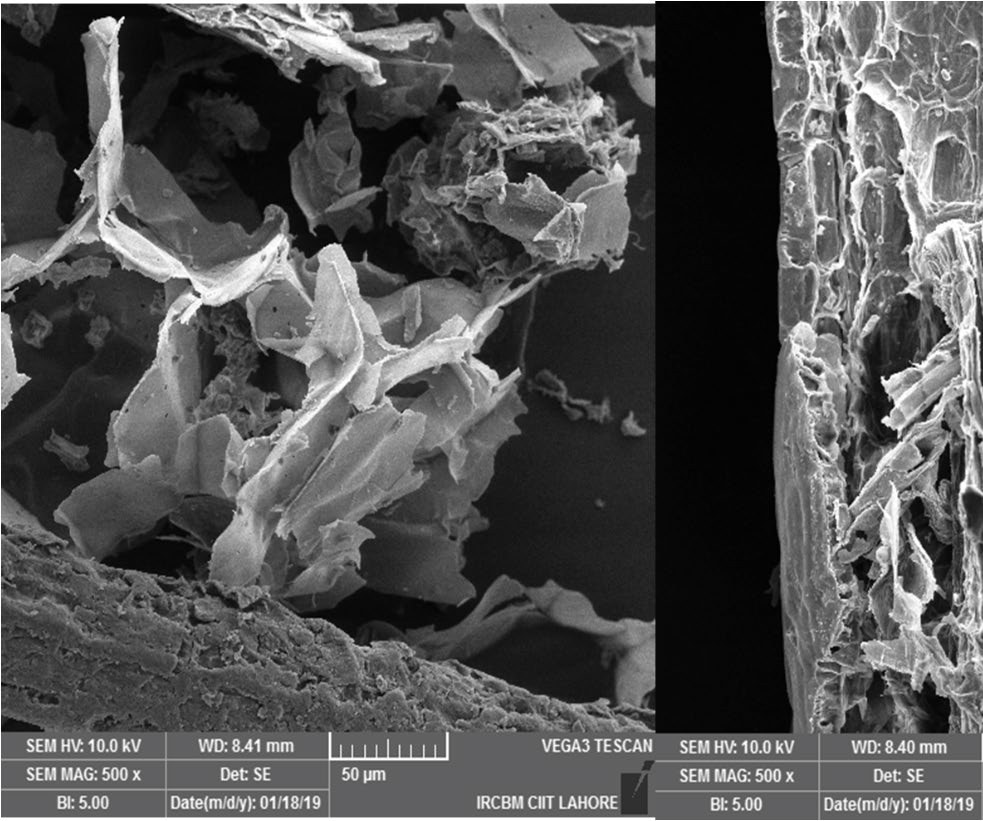
SEM micrographs (500×) of the sorghum biosorbent. First author Find paper ↗ -
Citric acid–B. spectabilisSustainable, cost-effective biosorbentRemoves
- Lead · Pb²⁺
Citric acid functionalized Bougainvillea spectabilis: a novel, sustainable, and cost-effective biosorbent for removal of Pb²⁺ from wastewater
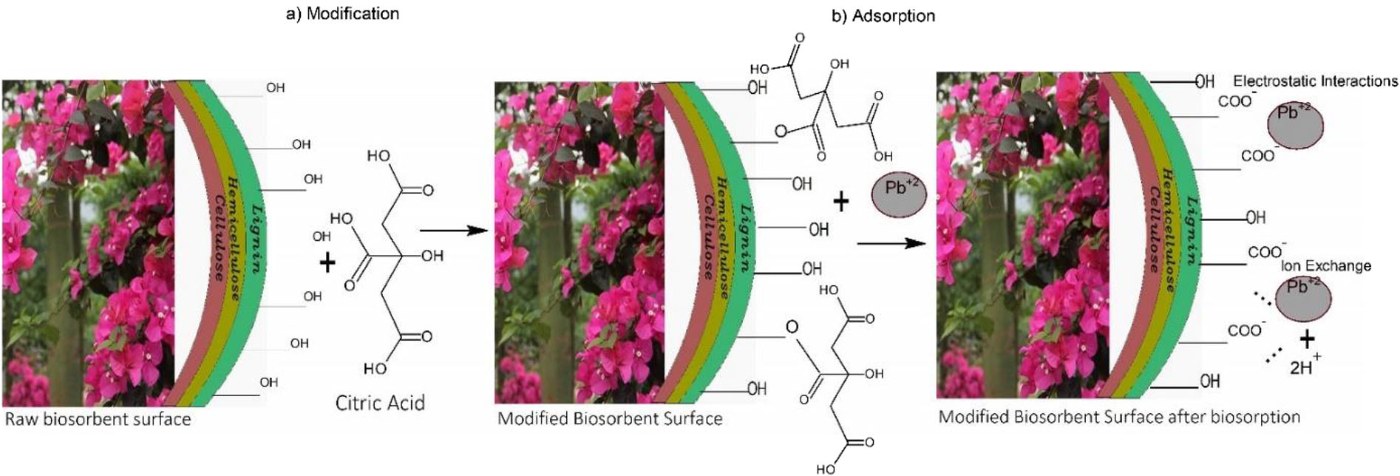
Citric acid adds carboxyl groups that capture Pb²⁺ through electrostatic interaction and ion exchange. Co-author Find paper ↗ -
B. spectabilis stalks & leavesNovel plant biosorbentRemoves
- Cadmium · Cd(II)
- Copper · Cu(II)
A novel biosorbent Bougainvillea spectabilis stalks leaves for removal of Cd(II) and Cu(II) from wastewater
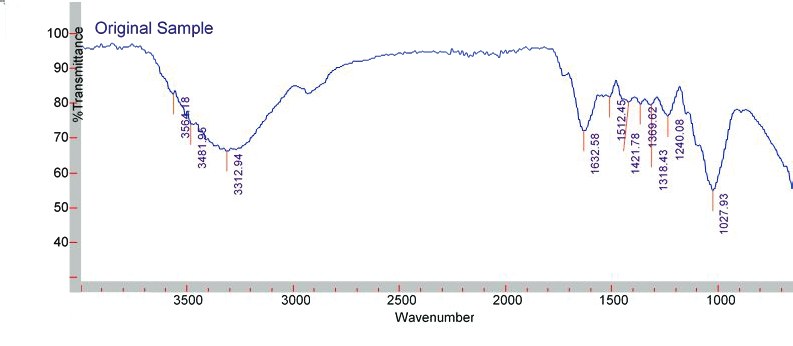
FTIR spectrum of the biomass, showing the hydroxyl, carbonyl and alkyl binding groups. Co-author · 5th author Find paper ↗
Peer-review service
Reviewer for Springer Nature journals across microbiology, analytical chemistry, water science, and environmental nanotechnology. Certificates are on the News page.
- Scientific Reports2 manuscripts · 2023
- Microchimica Acta2025
- Archives of Microbiology2023
- Water Conservation Science and Engineering2023
- Nanotechnology for Environmental Engineering2025