Research
Photocatalyst synthesis, photocatalytic degradation, and advanced water treatment — with a parallel foundation in green biosorption and analytical instrumentation.
- 10+Years in research & teaching
- 9Peer-reviewed papers
- 13Student projects supervised
- 8Characterization & analytical techniques
Overview
My work centers on visible-light photocatalysis and advanced processes for the remediation of contaminated water.
My doctoral research at the University of the Punjab addressed the removal and degradation of textile dyes, pharmaceuticals, and heavy metals from simulated wastewater using engineered nanomaterials and green sorbents, complemented by systematic kinetic, thermodynamic, and mechanistic analysis. Across more than a decade in higher education and analytical research — including a dedicated research-analyst appointment and the independent supervision of 13+ MPhil and BS research projects — I have developed end-to-end competence in nanophotocatalyst synthesis, structural and optical characterization, photocatalytic reaction design, and reaction-kinetics modeling.
Publications at a glance
Key figures from my peer-reviewed papers — photocatalysts first, then green biosorbents. Click a figure to enlarge it, or open the paper on the Publications page.
-
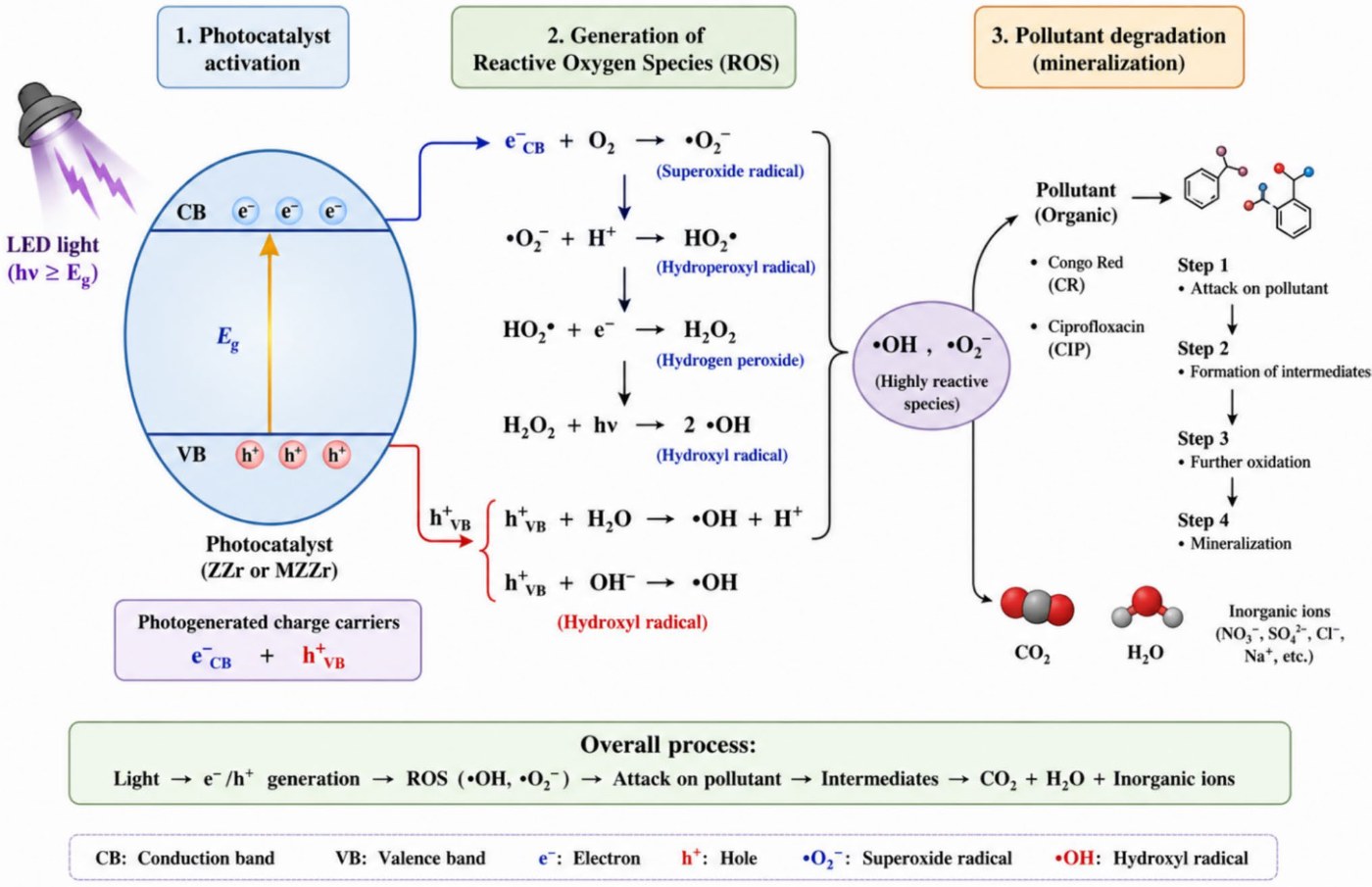
Zn–Mo co-doped ZrO₂ under visible light
Proposed mechanism: LED light excites the catalyst, and the resulting electron–hole pairs form reactive oxygen species (•OH, •O₂⁻) that break Congo Red and ciprofloxacin down to CO₂, water and inorganic ions.
View paper → -
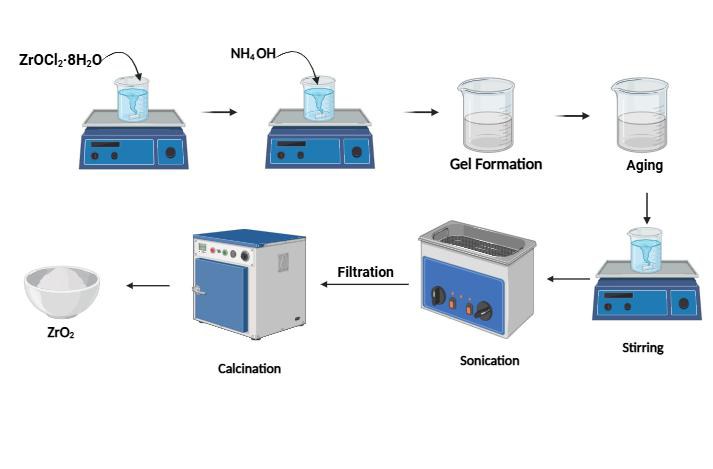
Vanadium-doped zirconia
Synthesis route: gel formation, aging, sonication, filtration and calcination to ZrO₂.
View paper → -
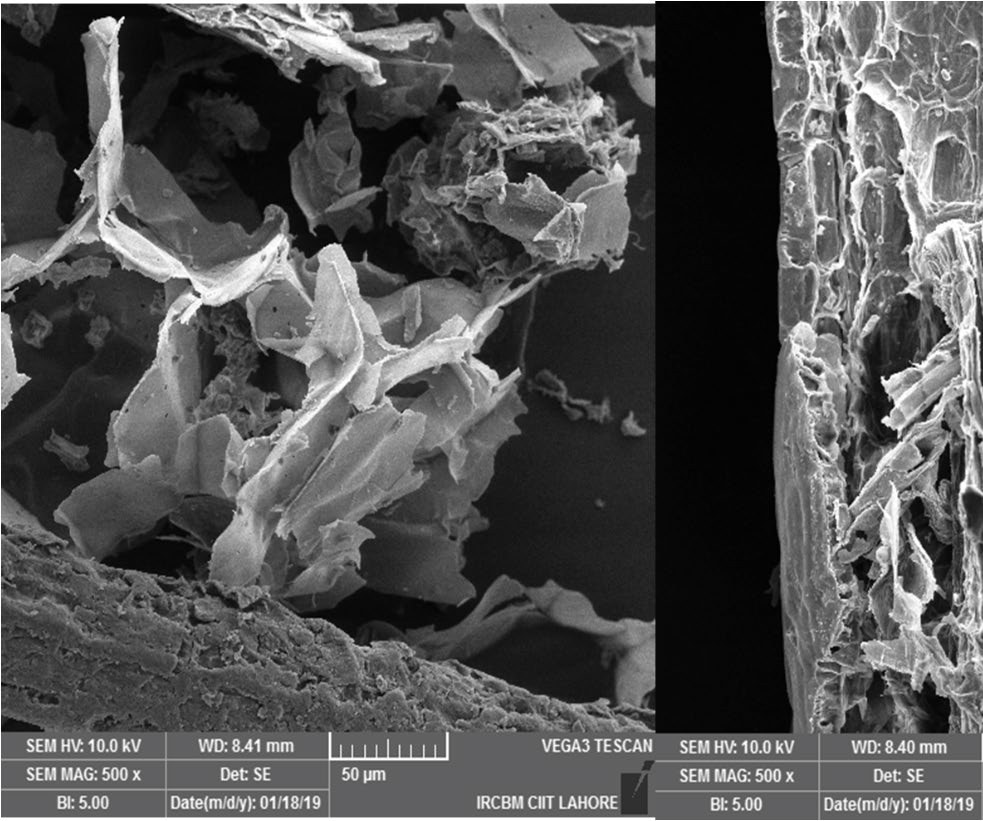
Phthalate-functionalized Sorghum bicolor
SEM micrographs (500×) of the sorghum biosorbent used to remove Alizarin Red S and Bromophenol Blue.
View paper → -
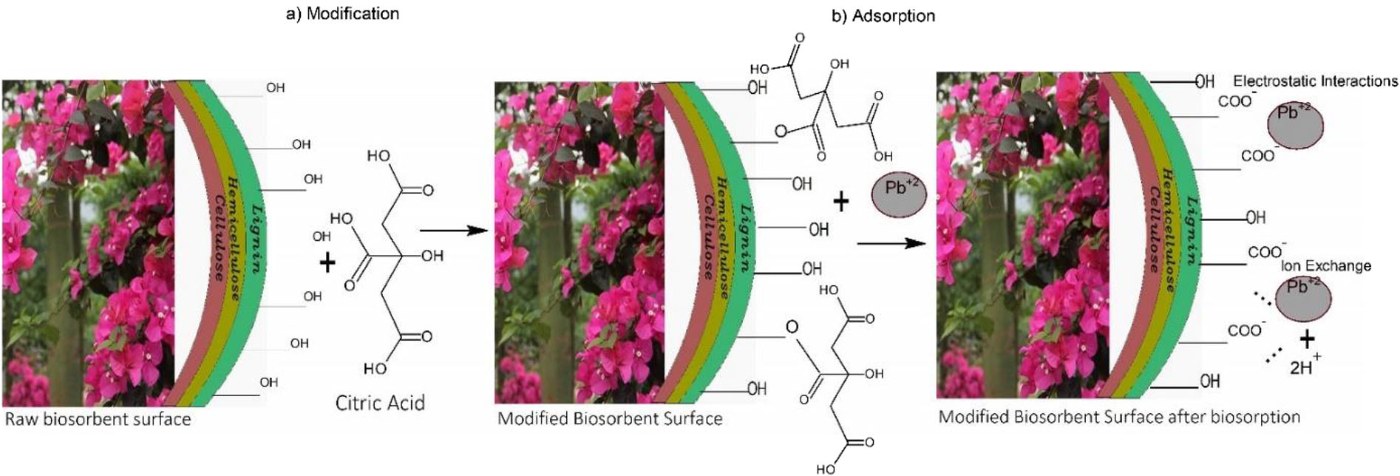
Citric acid–functionalized Bougainvillea spectabilis
Citric acid adds carboxyl groups to the plant surface, which then capture Pb²⁺ through electrostatic interaction and ion exchange.
View paper → -
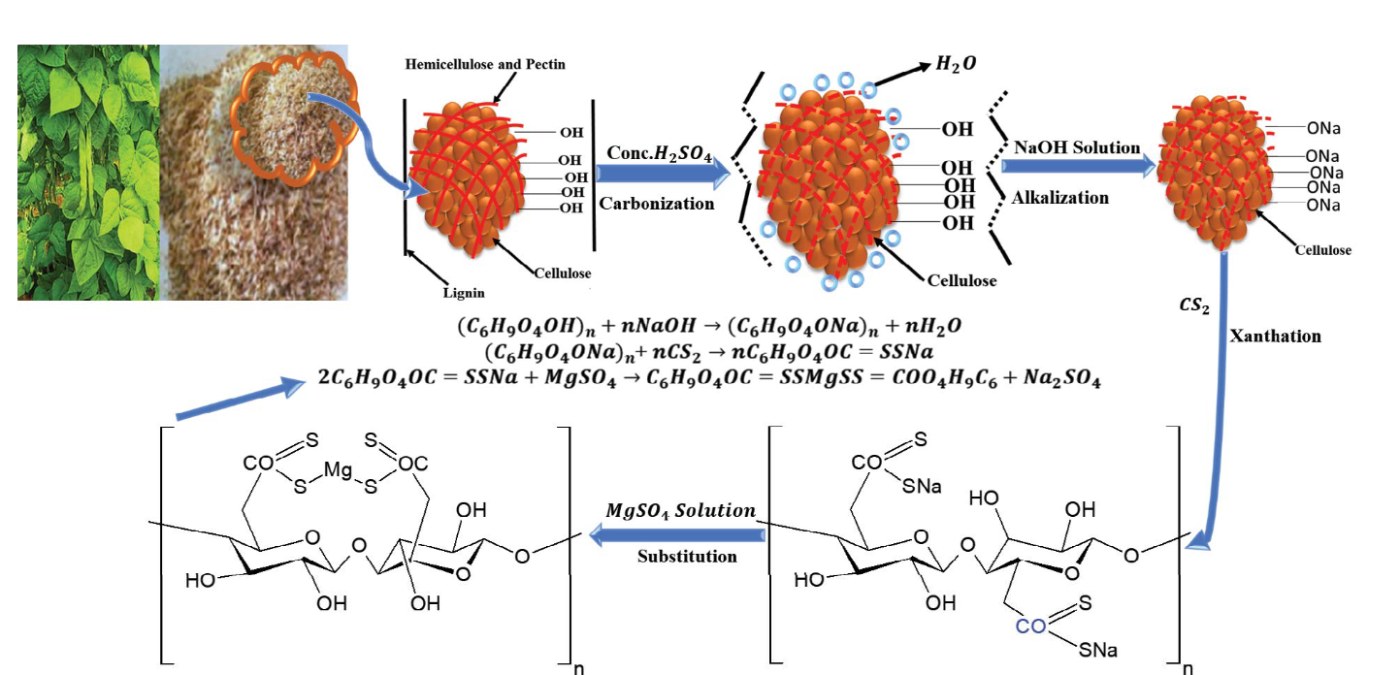
Xanthate-modified Phaseolus vulgaris
Carbonization, alkalization, xanthation and Mg substitution create binding sites for lead and cadmium.
View paper → -
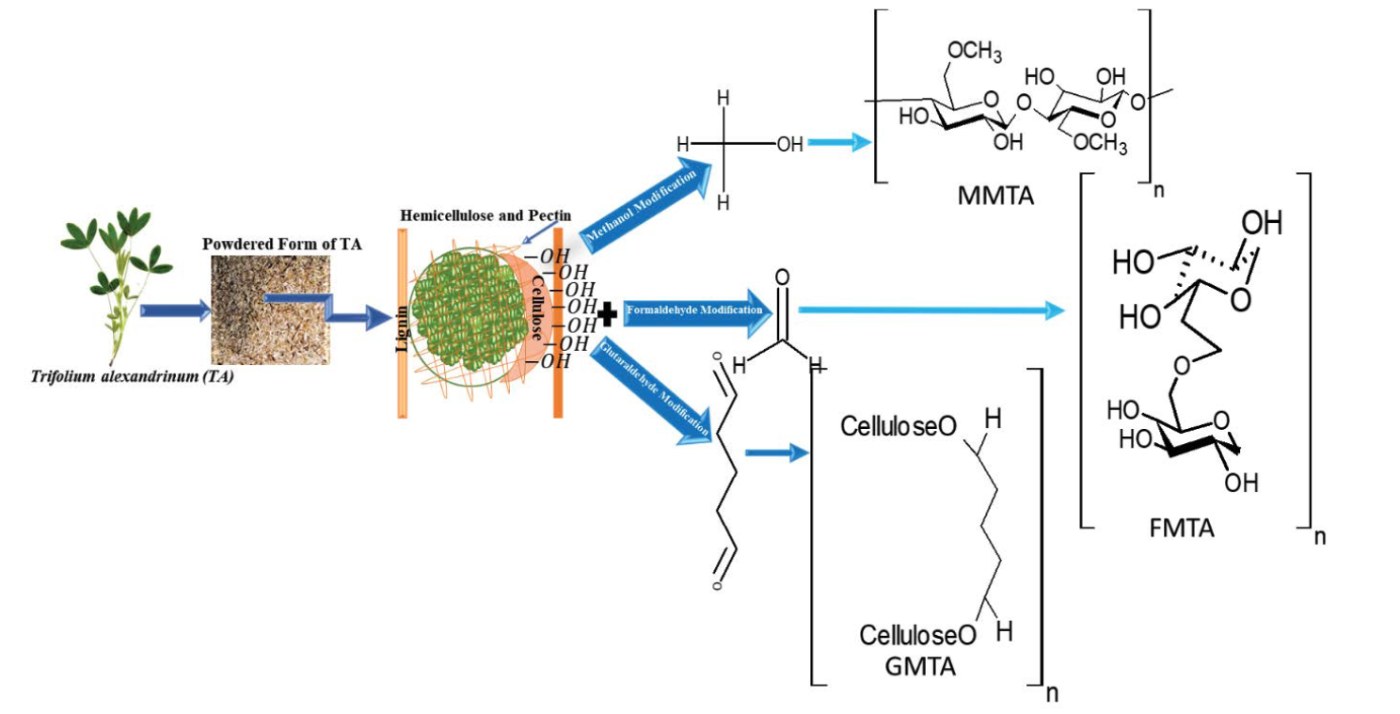
Modified Trifolium alexandrinum
Methanol, formaldehyde and glutaraldehyde modifications of clover biomass for Cr(III) removal.
View paper → -
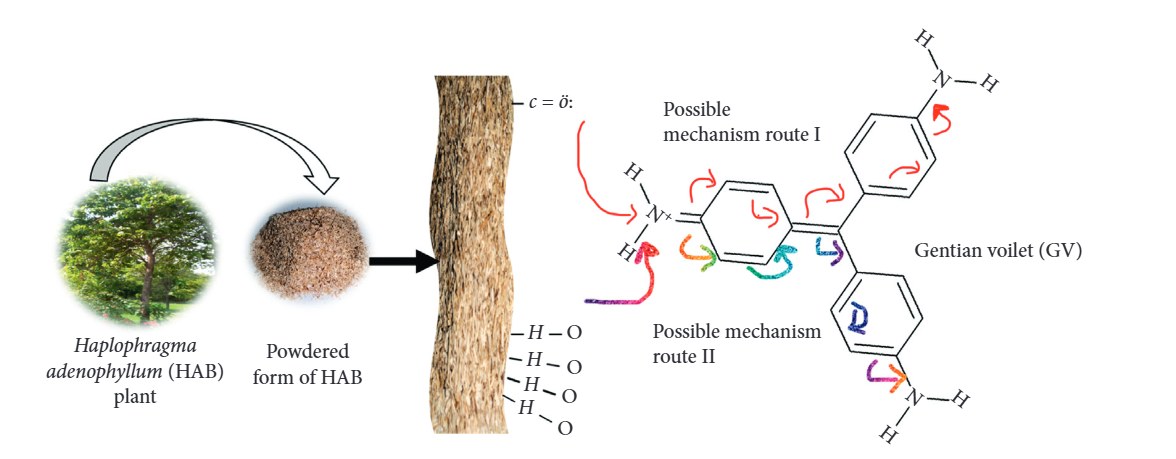
Haplophragma adenophyllum biowaste
Possible routes by which Gentian Violet dye binds to the powdered bark. First-author paper.
View paper → -
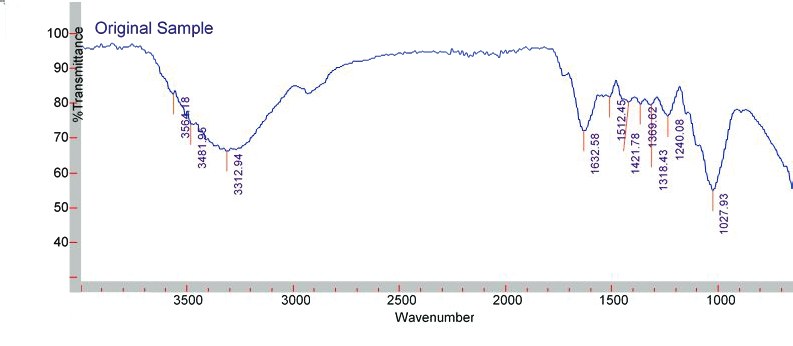
Bougainvillea spectabilis stalks & leaves
FTIR spectrum showing the hydroxyl, carbonyl and alkyl groups that bind Cd(II) and Cu(II).
View paper →
Photocatalyst synthesis
A major strand of my research is the design and synthesis of transition-metal-doped and co-doped zirconium dioxide (ZrO₂) photocatalysts.
I co-developed vanadium-doped ZrO₂ (V–ZrO₂) and zinc–molybdenum co-doped ZrO₂ (Zn–Mo–ZrO₂) systems in which dopant identity and loading, calcination conditions, and phase composition were tuned to narrow the band gap, suppress electron–hole recombination, and activate the catalyst under visible light — work published in Chemical Papers (2026) and the Iranian Journal of Catalysis (2026). In parallel I have advanced green, plant-mediated synthesis of metal and bimetallic nanocatalysts — including Aloe barbadensis–mediated zirconium nanohybrids (BioNanoScience, in press) and, through supervised student research, Cymbopogon citratus–derived Cu@Zr, Ni–Mo@Zr, and Mg@Zr nanoparticles — giving me hands-on command of low-toxicity, sustainable routes to catalytic nanomaterials with controlled size, morphology, and surface functionality.
- Dopant identity & loading
- Calcination conditions
- Phase composition
- A narrower band gap
- Less electron–hole recombination
- Activity under visible light
- Doped oxide V–ZrO₂ Vanadium-doped zirconia Iranian J. Catalysis, 2026 →
- Co-doped oxide Zn–Mo–ZrO₂ Zinc–molybdenum co-doped zirconia Chemical Papers, 2026 →
- Green synthesis Zr nanohybrids Aloe barbadensis-mediated BioNanoScience, in press →
- Green synthesis Cu@Zr Cymbopogon citratus-derived Supervised project, 2024 →
- Green synthesis Ni–Mo@Zr Trimetallic nanoparticles Supervised project, 2024 →
- Green synthesis Mg@Zr Bimetallic nanoparticles Supervised project, 2024 →
Photocatalytic degradation experiments
I have designed and executed systematic photocatalytic degradation experiments against recalcitrant organic pollutants under visible and LED irradiation.
Targets include the azo/triarylmethane dyes Congo Red, Gentian Violet, and Malachite Green, and the fluoroquinolone antibiotic ciprofloxacin. These studies systematically varied catalyst dose, initial pollutant concentration, pH, and irradiation time; quantified degradation by UV–Vis spectrophotometry; and evaluated catalyst reusability and stability over successive cycles. I performed reaction-kinetics modeling (pseudo-first-/second-order and Langmuir–Hinshelwood analysis) and mechanistic studies using reactive-species scavenging to identify the dominant radicals (•OH, O₂•⁻, h⁺) driving mineralization, establishing clear structure–activity relationships for the doped-oxide systems.
- Congo RedAzo dye
- Gentian VioletTriarylmethane dye
- Malachite GreenTriarylmethane dye
- CiprofloxacinFluoroquinolone antibiotic
- Set conditionsCatalyst dose, pollutant concentration, pH, irradiation time
- IrradiateVisible and LED light sources
- QuantifyUV–Vis spectrophotometry
- Model kineticsPseudo-first/second-order, Langmuir–Hinshelwood
- Probe mechanismReactive-species scavenging•OHO₂•⁻h⁺
- ReuseStability over successive cycles
Materials characterization & analytical instrumentation
I am hands-on across the characterization workflow for photocatalytic and sorbent materials.
I use XRD for phase and crystallinity, FTIR for surface functional groups, UV–Vis diffuse reflectance for band-gap estimation, and SEM/TEM for morphology. During a dedicated research-analyst post at the University of the Punjab I operated, calibrated, and maintained ICP-OES, atomic absorption spectroscopy (AAS), FTIR, HPLC, and flame photometry for quantitative water-quality and trace-elemental analysis, giving me a strong analytical foundation for tracking reaction intermediates and degradation products.
- XRDPhase & crystallinity
- FTIRSurface functional groups
- UV–Vis DRSBand-gap estimation
- SEM / TEMMorphology
- ICP-OESTrace-elemental analysis
- AASMetal quantification
- HPLCSeparation & quantitation
- Flame photometryWater-quality analysis
Adsorptive water treatment & hybrid process design
My doctoral, MPhil, and MSc research collectively built deep expertise in green biosorption for dye and heavy-metal removal.
Each sorbent was given complete equilibrium-isotherm, kinetic, and thermodynamic characterization — among them Haplophragma adenophyllum bark, phthalate-functionalized Sorghum bicolor, and functionalized Bougainvillea and Trifolium biomass. I have supervised the fabrication of nanocellulose–pectin composite beads for adsorptive dye removal. This dual command of pollutant capture (adsorption) and destruction (photocatalysis) underpins my interest in integrated “capture-and-destroy” materials and reactor concepts.
- Haplophragma adenophyllum biowaste Gentian Violet 2021 →
- Phthalate-functionalized Sorghum bicolor Alizarin Red S · Bromophenol Blue 2020 →
- Modified Trifolium alexandrinum Cr(III) 2022 →
- Citric acid–functionalized Bougainvillea spectabilis Pb²⁺ 2019 →
- Bougainvillea spectabilis stalks & leaves Cd(II) · Cu(II) 2019 →
- Nanocellulose–pectin composite beads Synthetic dyes Supervised, 2026 →
Computational & mechanistic tools
I complement experimental work with computational analysis, including molecular docking and ADMET profiling, applied to catalysis, structure–activity questions, and the interpretation of degradation pathways.
- Molecular dockingBinding & structure–activity
- ADMET profilingIn silico property assessment
Research supervision
Thirteen MPhil and BS research projects supervised, 2022–2026 — from photocatalysts and green nanoparticles to trace-metal detection and herbal formulations.
- BS ChemistryFabrication of green nanocellulose-pectin composite beads for adsorptive removal of synthetic dyes from aqueous solutionMaryam Bibi, Sania Latif
- MPhil ChemistryPhytochemical profiling and in silico assessment of herbal therapeutics to enhance insulin sensitivityKishwar Aslam
- BS ChemistrySilica nanoparticle–functionalized hydrogel-coated substrates for enhanced oil–water separationMuhammad Abubakar Sahaf, Junaid Ashraf, Umar Faisal
- BS ChemistryFormulation of a skin-friendly herbal moisturizing cream using plant extractsMuhammad Hanzla Maqsood, Mahnoor, Amina Bint-e-Zaheer
- BS BiochemistryPhytochemical screening and formulation of a herbal cream for acne treatmentAzka Najeeb, Rimsha Intisar, Areeba Kashif
- BS ChemistryCymbopogon citratus-derived Cu@Zr bimetallic nanoparticles as advanced photocatalysts for organic pollutant degradationAbeeha Mustafa, Samia Shoaib, Hafiz Muhammad Talha
- BS ChemistrySynthesis of trimetallic Ni-Mo@Zr nanoparticles embedded in Aloe vera for antifungal applicationsSehar Shahid, Muhammad Junaid, Muhammad Hamza
- BS ChemistryGreen synthesis of bimetallic Mg@Zr nanoparticles using Rosmarinus officinalis for antibacterial applicationsZain Ahmed, Areeba Rashid, Rabia Nadeem
- BS ChemistryDegradation of organic pollutants using Mo- and Zn-doped zirconia catalyst under LED lightLaiba Noreen, Rimsha Shafiq, Muhammad Arslan
- BS ChemistryDetection of Cr²⁺ and Sn²⁺ in commercial fruit juices in LahoreRubi Iqbal, Asad Atique, Sadia Saif
- BS ChemistryDetection of Cu²⁺ and Fe²⁺ in commercial tea brands in LahoreGohar Ali, Amina Siddique, Saba Afzal
- BS ChemistrySynthesis, characterization, and applications of Mg(OH)₂/MnO₂ nanocompositeAlisha Manzoor, Muhammad Ali, Mawara Shaukat
- BS ChemistryAnalytical quality design of RP-HPLC for simultaneous estimation of Metformin HCl, Empagliflozin, and LinagliptinAli Ur Rehman, Usama Saleem, Alina Ashraf