From Lahore to Glasgow: what a short research visit taught me
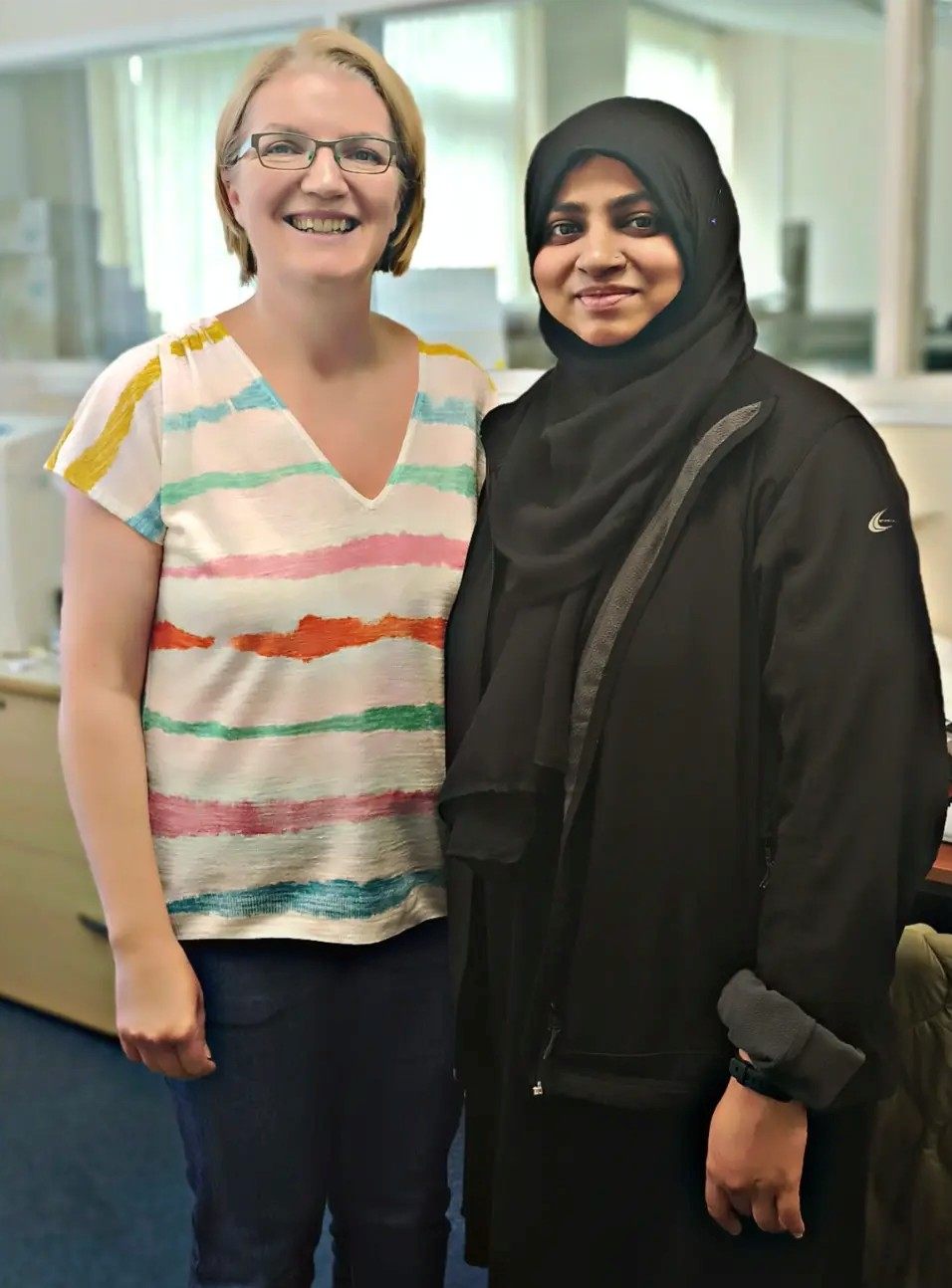
In March 2023, halfway through my PhD, I left Lahore for Glasgow. For the next six months I worked as a Visiting PhD Researcher at the Scottish Universities Environmental Research Centre (SUERC), University of Glasgow, funded by the Higher Education Commission of Pakistan through its International Research Support Initiative Program (IRSIP).
Six months is not long in the life of a research project. But that placement changed how I plan experiments, how I organise my work, and how I think about my place in science. This post is about those lessons, and it is also for PhD students in Pakistan wondering whether a short research visit abroad is worth the effort. It is.
Why I went
My PhD at the University of the Punjab was about a problem that is very visible in Punjab: textile dyes in wastewater. I was developing green, low-cost adsorbents to remove those dyes, and testing how well they worked, how fast, and why. Answering the why needs more than a colour change in a flask. It needs careful instrumental analysis and material characterisation.
IRSIP exists for exactly this situation. It lets PhD students spend up to six months in a research group abroad, working on their own thesis with access to facilities and expertise. I was also teaching at the University of Central Punjab at the time, so I took leave from my post to go. Leaving students and colleagues for half a year was not an easy decision, but it was the right one.
Lesson 1: six months is shorter than it sounds
The first thing a short visit teaches you is that time is the scarcest resource. There is no “next semester” to repeat an experiment, and once you are home, the instruments are thousands of kilometres away.
That pushed me to treat my work like a project with a deadline: a clear list of the experiments and analyses that mattered most for my thesis, in order of priority, with the questions each one had to answer. I still plan research this way. Before starting anything, I ask: if I only had time for three experiments, which three would they be?
Lesson 2: explain your work to people outside your field
SUERC is an environmental research centre, and my host, Gillian MacKinnon, works on biogeochemical tracers, not dye chemistry. That turned out to be a gift. When the people around you do not share your exact vocabulary, you have to explain what you are doing and why it matters in plain terms.
Every time I did that, my own understanding became sharper. Assumptions that seemed obvious inside my research bubble had to be justified. It is the same skill I now use in the classroom and when I talk to industry about wastewater: if I cannot explain it simply, I probably do not understand it well enough yet.
Lesson 3: organised work brings peace of mind
What struck me most in Glasgow was how organised the work was. Every experiment had a standard operating procedure (SOP), and it was followed at every step, from preparing a sample to running an instrument to recording the result. Nothing depended on memory or on “the way we usually do it”.
I expected that level of structure to slow me down. It did the opposite: it gave me peace of mind. When each step is written down and followed, you trust your results, you can repeat an experiment exactly, and someone else can pick up your work and understand it. You stop worrying about whether you missed something and put that energy into thinking about what the results mean.
It is the habit I most wanted to bring home. I now ask the students I supervise to write and follow a procedure for their experiments before they start, and to record what they did as carefully as what they found.
Lesson 4: a calm setting helps you think
Research is mental work, and your surroundings matter more than we usually admit. An organised lab and a calm working day made it easier to think clearly, and Scotland gave me beautiful places to rest my mind outside the lab: walks along the River Clyde in Glasgow, the city’s museums, and a visit to Edinburgh. I came back to my experiments refreshed, able to focus longer and to step back from a problem instead of rushing through it.
We cannot always choose our environment, but the experience taught me to protect my own focus: a tidy bench, a clear plan for the day, and time away from the lab to reset.
Lesson 5: independence grows when you are away from home
At home, help is always nearby: your supervisor, your lab mates, the people who know where everything is. In a new institution, even small things take initiative: finding out how equipment is booked, whom to ask, how a lab runs day to day. You make more decisions on your own, and you learn to trust them.
That confidence stayed with me. It is part of why I now want to lead research projects from design to publication, and to build collaborations of my own.
Lesson 6: science is a community, not just a lab
Before Glasgow, the international research community was something I met mostly through journal papers. Working inside a research centre in another country made it real. I saw how a different system organises shared facilities, supports early-career researchers, and brings together people from very different backgrounds around shared questions.
It also showed me that researchers from Pakistan have a great deal to contribute. The water problems we work on at home, such as industrial effluent, dyes, and heavy metals, are global problems, and our field experience with them is valuable.
What I brought back
The work I carried out in Glasgow became part of my thesis, which I defended in April 2025. But the more lasting results are the ones that don’t fit on a CV: a way of planning, a respect for SOPs and organised work, and the belief that my research belongs in international conversations.
It also shaped where I want to go next. My research has since moved from biosorbents that capture pollutants to visible-light photocatalysts that destroy them, and the open questions now call for techniques and real-effluent testing that go beyond what I have used so far. That is why I am seeking a postdoctoral position, with the aim of bringing new methods and an international network back into teaching, supervision, and work with local industry.
If you are thinking of applying for IRSIP
A few things I would tell any PhD student in Pakistan considering a research visit abroad:
- Start the conversation with a host early. Write to researchers whose facilities and expertise match what your thesis actually needs, and explain concretely what you want to do.
- Choose for fit, not just for the name. The right instruments and a supportive host matter more than a university ranking.
- Write a focused work plan. Link each planned experiment to a thesis chapter. It strengthens your application and becomes your roadmap once you arrive.
- Prepare before you travel. Have your materials, methods, and questions ready, and check in advance what samples you are allowed to carry or ship.
- Sort out your commitments at home. If you are employed, arrange leave early and hand over your responsibilities properly.
- Document everything, and stay in touch. Your data needs to make sense when you are back home, and your new contacts are the start of your network.
I am grateful to the Higher Education Commission for funding the placement, to Gillian MacKinnon for hosting me, and to colleagues at SUERC and at home who made the six months possible.
If you are a student planning a research visit, or a group interested in hosting or collaborating on green water treatment, I would be glad to hear from you: momalakram96@gmail.com.